
Lincoln County 72-Hour Release Status
Lincoln County offers no verified 72-hour release feed. The Sheriff’s “Who is in Custody” link opens a generated New Inmate Roster. That output lists current custody when run. It does not preserve everyone who left over the prior three days. The Sheriff-branded roster address resolves to the same product, and neither endpoint provides a released-person archive, published refresh interval, or stated post-release retention period.
The difference is decisive. A 72-hour list would group completed exits by actual date and time. Lincoln’s roster can instead show a Release Date while a person remains listed, which makes that value scheduled or calculated. A name that is gone may reflect community release, ODOC transfer, another agency’s pickup, court movement, or corrected data. A Time Served record is the best local request for the completed county interval.
Note: The three-day window defines the request period, not a verified Lincoln County online feed.
Check Lincoln County Three-Day Releases
Set exact start and end dates before contacting Sheriff Records. A narrow three-day request is more useful than asking for “recent inmates” because it tells staff which existing Time Served records to locate. When a specific person is known, include the full name, date of birth, SID or Jail ID, and approximate booking date. Ask for the actual release date and time and whether the exit was community release or transfer, if those facts are maintained.
- Check the current roster for the name and spelling variants. Save identifiers, Book Date, Court, Current Disposition, and any Release Date.
- Use the Lincoln Jail Records Request Form and select Time Served Records for the defined 72-hour period.
- Add a Face Sheet request when it is needed to connect the custody interval with the correct booking.
- Read the court register and actual judgment or release order for the legal event.
- Check VISOR for a covered status change. Follow ODOC, another county, BOP, or ICE only when the disposition supports that route.
The county form lists an initial $15 search fee and permits further charges if ordinary research and processing time is exceeded. A requester can seek existing date and disposition fields, but the agency does not have to create a custom 72-hour report that it does not maintain. Sheriff records requests route through the Sheriff’s form rather than the county’s general form.
A clear request should identify each booking separately when the person entered custody more than once. Ask for the face sheet and Time Served record tied to the relevant booking date. Sheriff Records may release a full or redacted response, report no record, or withhold material under an exemption. If a reply does not cover the expected event, verify the spelling, DOB, SID, date range, and custodian before drawing a conclusion. The wrong three-day span can miss a late-night admission or an exit recorded after the period chosen.
The county records-routing page explains that Sheriff matters use the Sheriff process shown in the captured page.
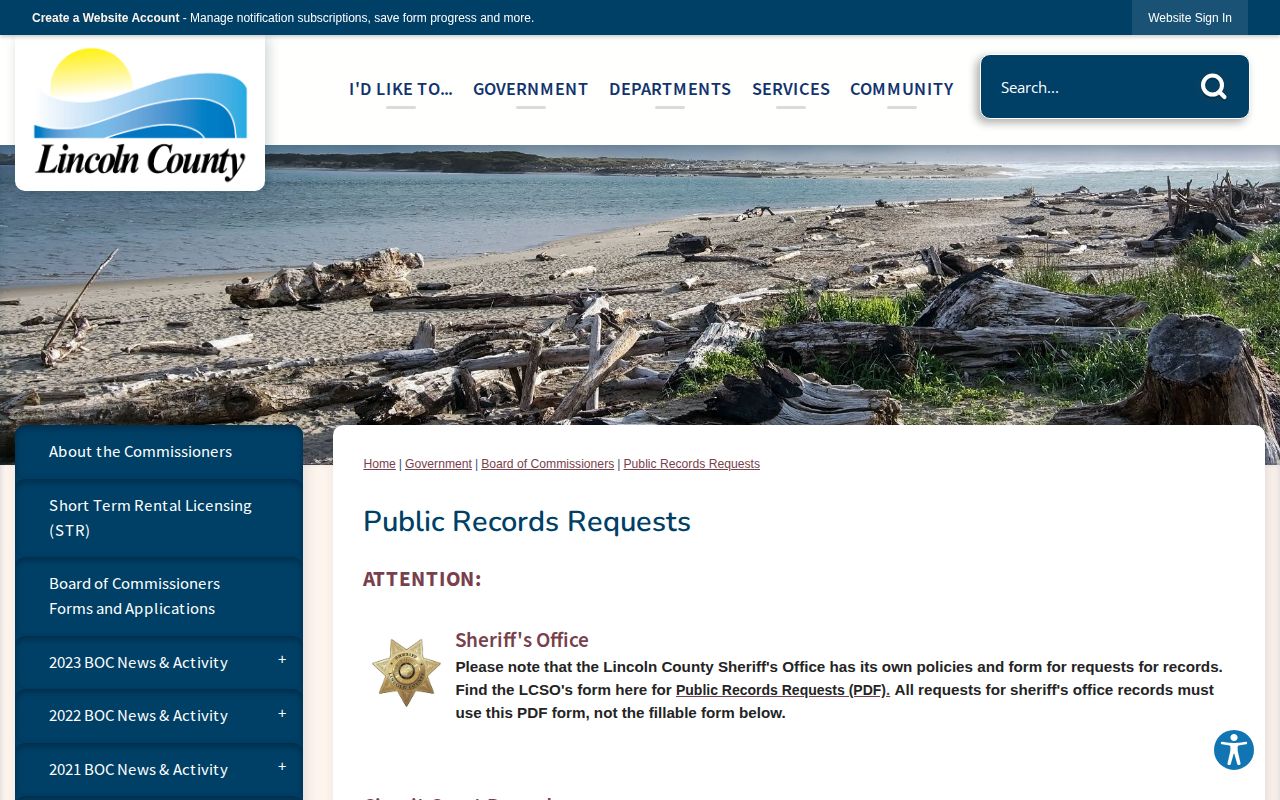
The routing page helps the request reach the custodian of jail Time Served records rather than an office that holds unrelated county files.
Lincoln County Three-Day Record Fields
No official 72-hour table exists, so the fields below separate identifiers from proof. Current roster data can help locate the later record. The completed response should supply the custody facts the requester asked for, subject to what the Sheriff maintains and may disclose.
| Field or record | Use in a 72-hour review |
|---|---|
| Jail ID and SID | Match the booking across roster, Sheriff records, VISOR, court, and ODOC. |
| Book Date | Define which county custody interval is being checked. |
| Current Disposition | Identify a possible local exit, sentence, hold, or transfer route. |
| Roster Release Date | Treat as prospective when the person still appears in current custody. |
| Actual release date and time | Request through Time Served Records as the completed county event. |
| Release or transfer disposition | Distinguish return to the community from movement to another authority. |
Charges, attorney, arresting agency, court, and next court date can aid identity and case research. They do not prove physical release. The court judgment answers what the judge ordered, while the jail record answers when Lincoln County custody actually ended. Those records should be read together rather than forcing one source to answer both questions.
Lincoln County Weekend Release Checks
A three-day interval is practical after a weekend, holiday, or missed same-day check. It can encompass several roster runs and more than one court day. Still, Lincoln County has not published an ordinary weekend discharge schedule, a standard release hour, or a guaranteed roster cadence. No official source supports the claim that an entry will appear or disappear on a set timetable.
Build the interval around calendar dates, not assumptions about office or release timing. If an order was entered late on one day, physical discharge may occur later. If the person had a detainer, another authority may take custody. Sheriff Records can document the local endpoint, and the court register can show the legal action that preceded it. For a same-day inquiry, the Jail Releases: 24 Hours process uses a narrower request window.
Note: A holiday or weekend may affect when a requester receives records, but no Lincoln source states that it changes the underlying release-record fields.
Why Lincoln County Release Rows Vanish
Lincoln’s roster is designed to show current inmates. Once a record no longer fits that purpose, it may leave the output. That change does not state why. A completed community release is one possibility. Transfer to ODOC, an outside-jurisdiction pickup, or a data correction can create the same visible result. The three-day window merely shows when the change was noticed, not the legal or physical outcome.
A Release Date has the opposite trap. It may be visible before the person leaves. Record the exact displayed value, the run time, the SID, and the Current Disposition, but describe the date as planned or calculated. Then seek the later status. A completed Time Served response or receiving-agency intake supplies stronger evidence of the transition each record documents.
Lincoln County Release Court Check
The Oregon court register can preserve the legal trail after the live jail row is gone. It may show a filing, release decision, plea, judgment, or later order. A judgment establishes the sentence or disposition, but it does not normally prove the exact minute jail staff completed discharge. Lincoln Circuit Court records and the Sheriff’s Time Served response therefore answer related but different questions.
Use Oregon Find a Case guidance to choose the correct court access route. Free basic case search and courthouse kiosks can serve a focused inquiry; OJCIN offers broader register access under its own terms. Protected matters, including juvenile cases, may not appear in ordinary public results.
The captured OJCIN page shows the statewide register service that can supply legal events tied to a Lincoln County release inquiry.
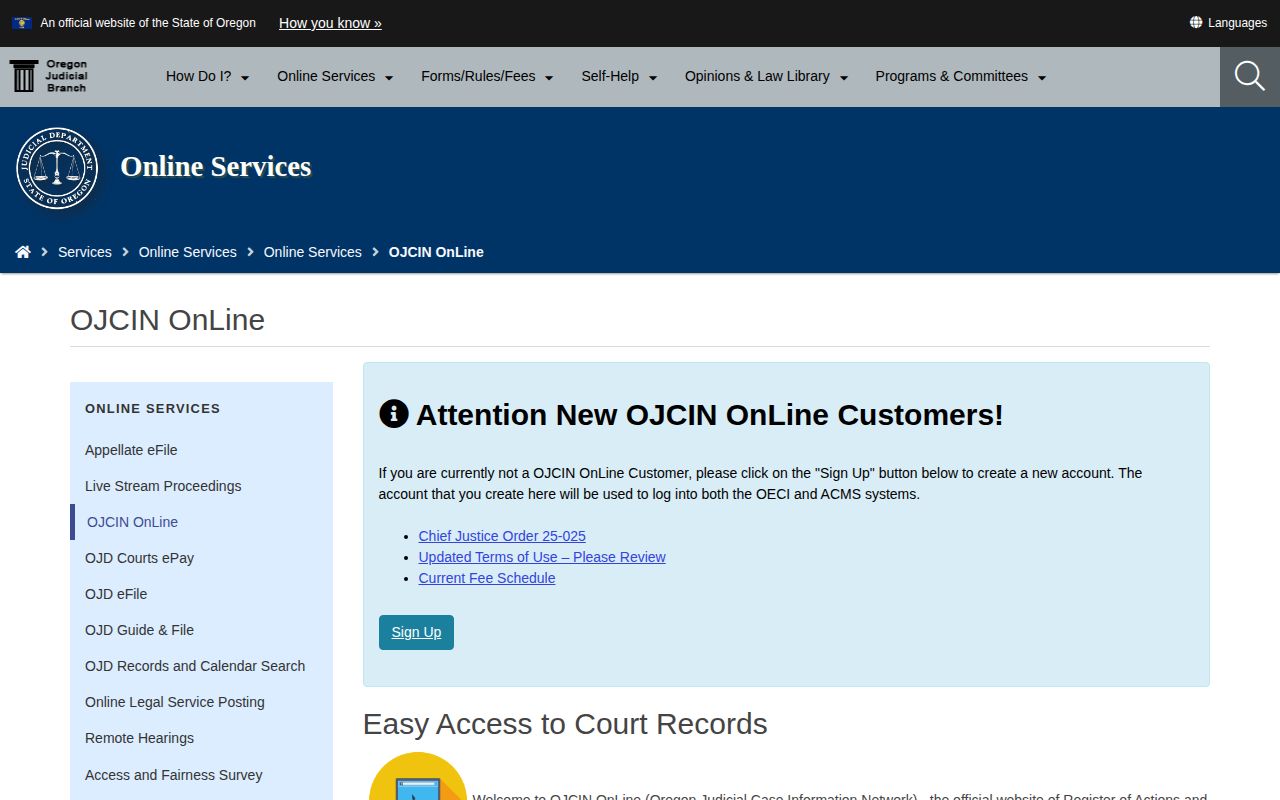
A docket or register should lead to the actual order, while Sheriff records remain the source for physical jail discharge timing.
Lincoln County Release Paths
Community release may leave a person subject to bail conditions, probation, parole, post-prison supervision, or electronic monitoring. VISOR can provide custody or supervision status and notifications where the person and agency are covered. It is informational rather than a certified release record. A fully discharged former county detainee may not remain searchable.
An ODOC disposition shifts the inquiry to Oregon Offender Search and ODOC records. Federal custody requires the BOP locator. ICE’s online locator may include a released person only during its limited 60-day window, and no match outside that span proves nothing about an older immigration event. Lincoln County has no verified operating federal prison or ICE detention facility, so these systems are follow-up routes only when the county record or court case points there.
County supervision also deserves a separate check. Lincoln County Parole & Probation may verify that it is the responsible office within disclosure limits. Its Jail Release/Intensive Supervision caseload shows that a person can leave jail due to space demand while still serving the sentence under close supervision. Probation may also be imposed without prison, so supervision status by itself does not prove an ODOC release. Use the actual order and custody record to identify the sequence.
The ICE attorney information resources document the limited released-person lookup period shown in the captured official page.
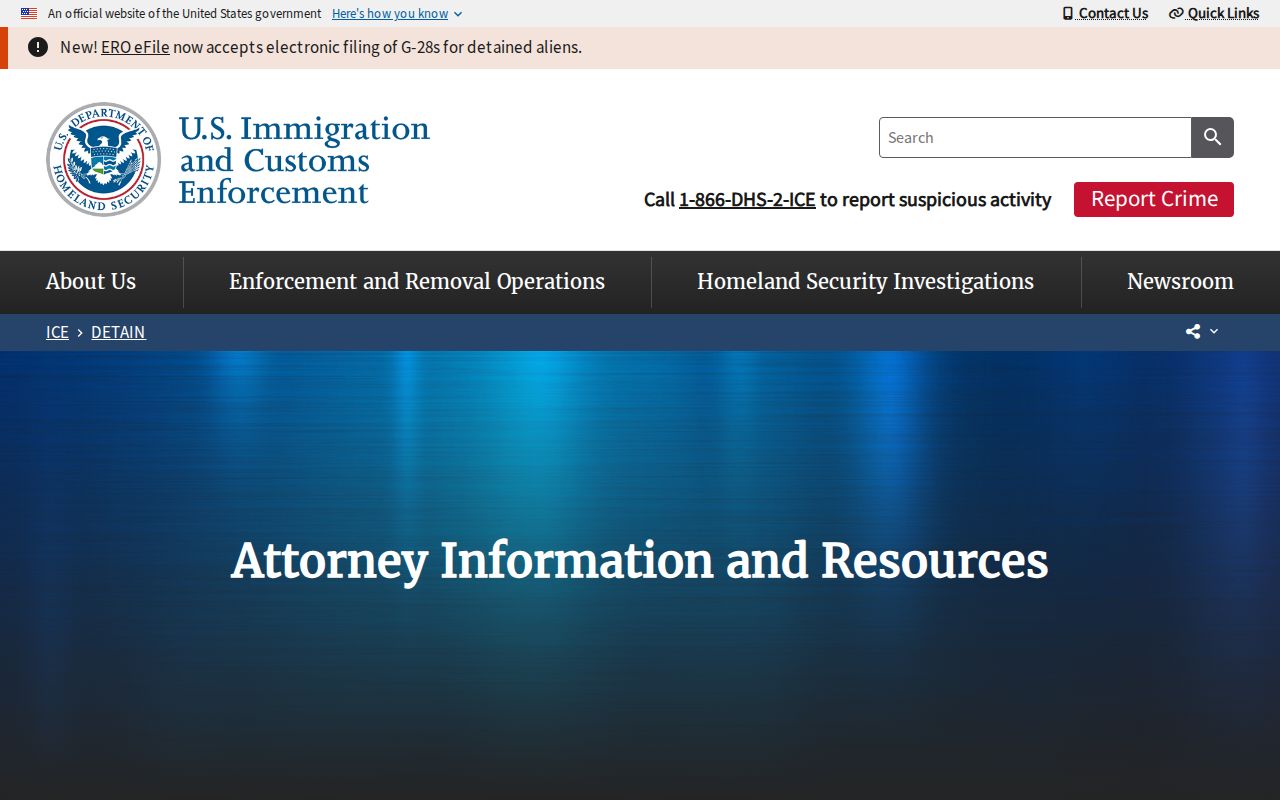
The federal window is not a substitute for the Lincoln County Time Served record that identifies whether an immigration transfer occurred.
Note: Follow a federal locator only when the county disposition or case record supports that jurisdiction.
- Community release
- Physical county custody ends and the person returns to the community, possibly with conditions.
- Transfer
- Lincoln custody ends because another authority takes custody.
- Prospective date
- A planned or calculated date that does not prove the event occurred.
- Discharge
- An agency-documented end of custody or supervision, depending on the record.